Yes, Tu B’Av has passed a while ago.
Yet, I want to publish this small post about my love even though I am so late. I do it because this love is timeless, and it’s expression is needed to be published every day.
The holiday of Tu B’Av remains largely unfamiliar even among Jews who mark the major points of the calendar—Pesach, Sukkot, Rosh Hashanah. Yet it offers a rare emotional pause: the intensity of the Three Weeks has passed, and the gravity of the Days of Awe has not yet arrived. It is a moment of pause within the Jewish year.
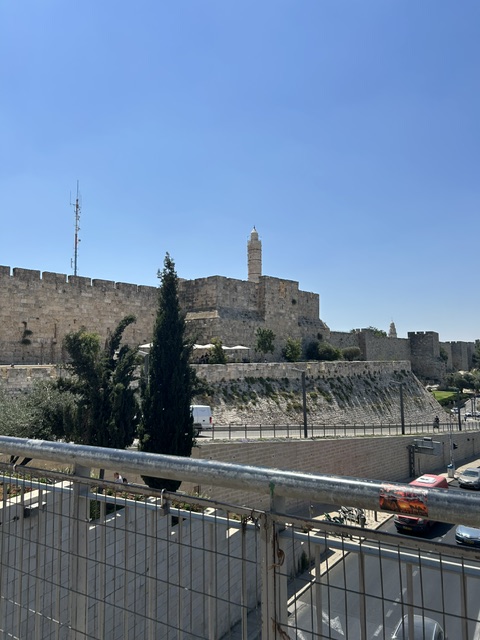
Though rooted in ancient tradition, Tu B’Av has only recently begun to reemerge in contemporary Jewish life. The holiday celebrates love — but love is not singular. It includes love for family, for partners, for community, for the land. For me, Tu B’Av evokes a particular love: my connection to Jerusalem.
At a recent conference, a colleague remarked, “When I come to Jerusalem, I feel suffocated. I need to leave as quickly as I can.” My experience could not be more different. When I arrive in Jerusalem, I feel expansion, not constriction. My lungs open. I breathe deeply, like someone who has wandered too long and finally finds fresh air.
Jerusalem—Yerushalayim proclaims: we are still here. God is still with us. We remain His people.
While Tu B’Av is often associated with weddings and romance, I return on this day to my love for Jerusalem—the most meaningful city in my world. As the prophet Isaiah calls:
Rejoice with Jerusalem and be glad for her,
All you who love her!
Join in her jubilation,
All you who mourned over her
My relationship with Jerusalem began in 1996, when I first approached the city flying in from Moscow. As the road ascended, I felt aliyah not only as an idea but as a physical reality. My ears popped; my heart trembled. That trembling has never left me.
I often wonder: if we, without the Beit HaMikdash, experience Jerusalem so intensely, what must it have felt like for our ancestors ascending on the shalosh regalim?
Jerusalem is not merely geographic. Though it lies between the Dead Sea and the Mediterranean, its true coordinates are spiritual. It is where The Divine presence and human history intertwine, where ancient stones bear witness to living voices. Its air carries a distinct clarity, and its soundscape weaves together Middle Eastern melodies with the languages of a global people.
There are moments, however, that resist explanation and remain best expressed in fragments:
When I stepped on these stones, where laughter and joy were once heard
When I walked through the streets, where merchants once sold their fare
When I looked at the coins once used as the tax for the Temple
When I saw the mosaics that cover the floors of the houses burnt by the Romans
When I gazed at the pool underneath the magnificent tunnel
When the water reflected my thoughts that I’ve almost forgotten myself
Then the tears of thanks to HaShem that permitted me see all this beauty streamed down my face
As Amos Oz observed, “Jerusalem contains more versions of heaven than we can imagine.” Yehuda Amichai described it as “a port city on the shore of eternity.” A port is a place of encounter—of arrival and departure, of intersection between worlds. Jerusalem lives in that space, where heaven and earth meet, where history and destiny converge.
Is this a romantic vision? Certainly—and deliberately so. I do not ignore Jerusalem’s tensions or complexities. But as long as I remain a visitor, I choose not to define the city by its fractures.
Perhaps, one day, God willing, I will merit to live there and take part more fully in its unfolding story. For now, my role is simpler: to witness, to give thanks, and to love.
On this Tu B’Av, a day devoted to love in all its forms, I offer mine to Jerusalem—with gratitude for the gift of returning, again and again, never often enough, yet always with awe.


Leave a Reply