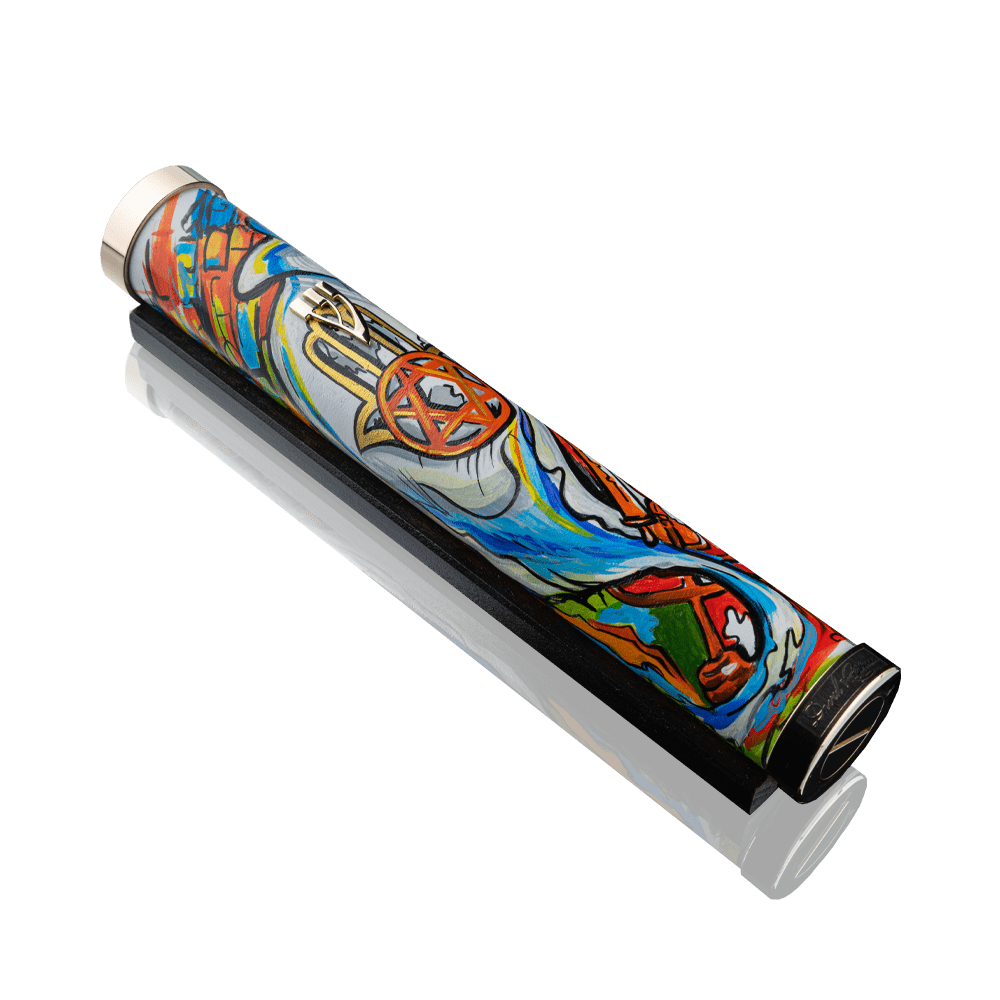
The Evolution of the Mezuzah
I am posting the D’var Torah I wrote on the subject of mezuzah. It was originally published on the Yeshivat Maharat website as part of our weekly Pashat haShavuah page. Hope you will find it interesting.
Parshat Bo has several commandments that lay the foundations of the Jewish faith at the moment when Bnei Yisrael, the children of Israel, are just making the first steps to becoming Am Yisrael, the people of Israel, one Jewish nation.
One of these commandments, the mitzvah of mezuzah, is mentioned seemingly in passing:
וְלָֽקְחוּ֙ מִן־הַדָּ֔ם וְנָ֥תְנ֛וּ עַל־שְׁתֵּ֥י הַמְּזוּזֹ֖ת וְעַל־הַמַּשְׁק֑וֹף עַ֚ל הַבָּ֣תִּ֔ים אֲשֶׁר־יֹאכְל֥וּ אֹת֖וֹ בָּהֶֽם
They shall take some of the blood and put it on the two doorposts and the lintel of the houses in which they are to eat it [the Passover sacrifice]. (Exodus 12:7)
וְהָיָה֩ הַדָּ֨ם לָכֶ֜ם לְאֹ֗ת עַ֤ל הַבָּתִּים֙ אֲשֶׁ֣ר אַתֶּ֣ם שָׁ֔ם וְרָאִ֙יתִי֙ אֶת־הַדָּ֔ם וּפָסַחְתִּ֖י עֲלֵכֶ֑ם וְלֹֽא־יִֽהְיֶ֨ה בָכֶ֥ם נֶ֙גֶף֙לְמַשְׁחִ֔ית בְּהַכֹּתִ֖י בְּאֶ֥רֶץ מִצְרָֽיִם
And the blood on the houses where you are staying shall be a sign for you: when I see the blood I will pass over you, so that no plague will destroy you when I strike the land of Egypt. (Exodus 12:13)
At that point of time, it was imperative for the Jews to show to God, and to themselves, that they were brave enough not to fear their hostile neighbors, but to revere their God by making a provocative gesture of painting their doorposts with blood, not knowing the outcome of their action.
This first mitzvah of mezuzah, given to the Jews in the land of Egypt essentially divided the people into those who became a part of the Jewish nation, and those who didn’t. Those who left Egypt on the way to the Promised Land, and those who feared their Egyptian masters, or the change of their routine, and stayed.
Today, when putting a mezuzah on one’s door has again become an act of bravery, it is interesting to trace how this commandment became so widely practiced. Already in antiquity, in one of the earliest sources we can read today, Josephus noted that this was a practice of his time:
They are also to inscribe the principal blessings they have received from God upon their doors … that God’s readiness to bless them may appear everywhere conspicuous about them.
There are multiple examples of ancient mezuzot from the Herodian, Hellenistic-Roman, and Hasmonean periods found among the scrolls in the Qumran caves. These can be seen today in the Dead Sea Scroll Library.
Throughout the ages, Jews were sometimes more and sometimes less punctilious in observance of this mitzvah. In Medieval Europe, mezuzot became an object of suspicion and envy at the same time. Christians viewed mezuzot as devices of sorcery, sometimes stabbing the mezuzot and ruining the parchment inside. They were eager to use mezuzot as magical instruments for themselves though. Toward the end of the fourteenth century, for example, the Bishop of Salzburg asked a Jew to give him a mezuzah to attach to the gate of his castle, but the rabbinic authority to whom this Jew turned for advice refused to countenance so outrageous a prostitution of a distinctively religious symbol.
The Middle Ages also saw the tradition of decorating the mezuzah coverings with elaborate designs, and even sometimes with gold leaves and precious stones. Today, the art of the mezuzah casing is widespread, and one can see thousands of beautiful designs throughout the world.
Commentaries on the laws of the mezuzah abound, just like the reasonings for its meaning. One of the interesting questions is why do we put mezuzot today not only on the outside of our homes, but also inside, on the door of every room? First, we have to understand what different rooms mean in our lives. Each room has a different utilization, hence, a different state of mind. “On the most basic level we might say that the mezuzah affixed at the entrance of each room dedicates that room with its distinct purpose to God.” In order to move from one room to another, one’s state of mind has to be changed, even if a little bit.
The Talmud says:
לֹא יִפָּטֵר אָדָם מֵחֲבֵרוֹ
אֶלָּא מִתּוֹךְ דְּבַר הֲלָכָה
A person should not take leave of another… [unless] from involvement in a matter of halakha.
That is to say that when two people part their ways, they should do so exchanging words of Torah.The Lubavitcher Rebbe offers a deeper insight into this Talmudic saying. The two “friends” who are parting, says the Rebbe, could also be seen as two aspects of oneself — the same person, but separated in time. Each day, according to the Zohar, brings its own purpose in Divine service. We evolve with time. Each day we are a new person, and each room in our house signifies a new purpose for this particular moment. When we move from room to room, we leave behind a specific task we performed in that room, and therefore a specific personality trait that we exemplified there. In a new room, our new personality trait will perform a different task, and therefore will need to acquire a different mindset. In order that there be no separation in consciousness from day to day, and from place to place, an individual should connect these two identities through learning, or at least remembering the words of Torah. This might be the purpose of the mezuzah: to act as a unifying agent between our different states of mind.
Mezuzah is one of those rare mitzvot that is supposed to grant us protection from the evil forces ready to enter our homes. And, yet, lots of times in our history the mezuzah on the door to a Jewish house meant danger to its occupants. When my family affixed a mezuzah to our apartment door in Moscow in the mid-1990s, a neighbor of ours called the police to our apartment claiming that we were “cooking gold” in there! Thankfully, at that time, after showing up a couple of times at our door and seeing a tiny apartment with two little girls in it, and no trace of gold, the police stopped coming.
Today, in many of the places of the world, due to the spike in anti-Semitism, some Jews are taking their mezuzot off the doorposts, just like some are taking off their kippot. While I understand their fears, I defer to the Zohar, that says:
וְקוּדְשָׁא בְּרִיךְ הוּא אָמַר לֵיהּ, כְּתוֹב שְׁמִי, וְשַׁוֵּי לְפִתְחָךְ, וְאַתְּ שָׁרֵי לְגוֹ בֵּיתָא, וַאֲנָא אוֹתִיב לְבַר בְּפִתְחָךְ לְנַטְרָא לָךְ.
And the Holy Blessed One says: “Write my name and put it on the door to your house, and I will sit outside your door to guard you.” (Zohar, Bo, 4:81)
Whether we look outwardly Jewish or not, whether we put mezuzot on our doors or not, even if we try to avoid confrontation, and do our best to blend in, history shows us that we are targeted no matter what. If one is a believer in the final redemption, one understands that having a mezuzah on one’s door will once again allow the Divine forces to recognize who is not afraid to show his/her Jewish identity. As Daniel tells us:
וּבָעֵ֤ת הַהִיא֙ יִמָּלֵ֣ט עַמְּךָ֔ כׇּל־הַנִּמְצָ֖א כָּת֥וּב בַּסֵּֽפֶר׃
At that time, your people will be rescued, all who are found inscribed in the book. (Daniel 12:1)
So, let us keep our mezuzot intact on our doors. With this small gesture we can show to God, ourselves, and our brothers and sisters in Israel that we are indeed one nation with one heart.
 Noshing Across the Nation
Leave a comment